





 Small Room 100-600 sq ft
 Medium Room 600-1000 sq ft
 Large Room 1000-2000 sq ft


HVAC Filter Replacement Guide
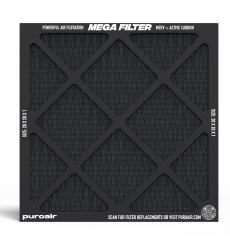
The PuroAir Mega HVAC Filters combine MERV 13 technology with activated carbon layers to deliver advanced protection against airborne particles and household odors. Designed for residential systems, these filters capture dust, pollen, pet dander, smoke, and other allergens that standard filters often miss. The activated carbon works to neutralize odors, leaving your home feeling fresher and healthier.
In this guide, we’ll take a deeper look at the different types of filter materials available, from standard fiberglass HVAC filters to MERV filters + Activated Carbon that purify ultra-fine particles and absorb odors and volatile organic compounds (VOCs). We’ll explain how each material works, what pollutants they target, and which environments they’re best suited for.
Unlike standard filters that clog quickly, PuroAir Mega Filters are designed to last up to three times longer. That means fewer replacements, less stress, and more consistent performance. By maintaining airflow while filtering more contaminants, they help your HVAC system run smoothly without compromise.
Cleaner air isn’t just about comfort, it’s about protecting your family. With PuroAir Mega Filters, you can breathe easier knowing your system is equipped with one of the highest residential ratings available. For households with pets, allergies, or kids, these filters provide reliable defense against airborne irritants.
To make maintenance effortless, PuroAir offers a subscription service that delivers fresh filters right to your door. You’ll get timely reminders and automatic shipments, eliminating the guesswork of when to replace your filter. It’s a simple way to ensure your home’s air stays consistently clean year‑round.
Benefits
What is the best HVAC home air filter for allergies?
MERV 13 is widely regarded as a top-tier choice for residential HVAC systems because it filters much smaller airborne particles than lower-rated filters, yet remains compatible with many modern home units. Current guidance suggests using MERV 13 for protection against smoke, smog/pollution, and severe allergy triggers (ex. dust, pollen, pet dander), especially in newer systems that can support its higher airflow resistance.
PuroAir MERV 13 + Activated Carbon HVAC Filters are designed with allergy relief in mind. Each HVAC filter has 3-layers of defense against large particles, fine allergens, and odors. The three layer filter is composed of a pre-filter screen layer to filter large particles, a MERV 13 filter layer to block fine air particles down to 1 micron, and a CarbonTech™ activated carbon filter layer to reduce smoke, cooking odors, pet smells, and other household or environmental pollutants.
PuroAir MERV 13 HVAC Filter Benefits:
- PuroAir HVAC Filters have three layers of defense.
- MERV 13 filters are designed to filter out 99.9%* of particles as small as 0.1 microns. This includes most common allergy triggers like pollen, dust, dander and smoke.
- CarbonTech™ Filter: In addition to the MERV 13 filter layer and pre-filter, PuroAir HVAC filters have activated carbon filters that can absorb odors, and some gases.
- Pre-Filter screens for larger particles like dust, hair, pollen, carpet fibers and other visible debris.
- Puroair Mega HVAC Filters last 3X longer than traditional fiberglass filters.
- Ideal AC filter for people with allergies or respiratory issues.
- Lab tested & proven to filter up to 99.9%* of pollutants.
- Easy installation and maintenance.
- PuroAir HVAC Filters are designed to last up to 90 days, or 3 months.
Why you should replace your HVAC filter versus washing or vacuuming:
❌ Vacuuming:
Unfortunately, vacuuming your air filter can actually do more harm than good. The force of a vacuum can damage the delicate filter material, reducing its ability to filter pollutants effectively. On top of that, because most vacuums aren't airtight, you may unintentionally release some of the trapped contaminants back into your home, undoing the very purpose of the filter.
Vacuuming a MERV 13 filter may also be ineffective because the dense pleated material traps fine particles deep within the fibers, far beyond what a vacuum can remove. The suction can tear or loosen those fibers, reducing the filter’s ability to capture contaminants. Since most MERV 13 filters are disposable rather than designed for cleaning, attempting to vacuum them can deform the pleats, restrict airflow, and place unnecessary strain on your HVAC system.
Vacuuming a MERV 13 filter is only appropriate when the filter is specifically designed to be washable or electrostatic, since these reusable models can tolerate light cleaning before being rinsed. Even then, vacuuming should be limited to removing light surface dust, mainly as a temporary measure to extend the filter’s life for a short period until a replacement arrives, and it should be done gently on the intake side to avoid damaging the filter.
You shouldn’t vacuum a MERV 13 filter if it’s a pleated disposable type, since vacuuming can’t restore its airflow or filtration. A filter that looks gray or heavily clogged also shouldn’t be vacuumed because the debris embedded deep in the media can’t be removed without causing damage. If the manufacturer doesn’t explicitly label the filter as washable or reusable, that alone is a clear sign it shouldn’t be vacuumed.
❌ Washing:
Most MERV 13 HVAC filters cannot be washed because water and cleaning solutions damage their delicate fibers and reduce their ability to filter pollutants. These filters are designed to mitigate microscopic particles deep within their weave, and washing can break down the material or loosen the fibers, making them far less effective. Most MERV 13 filters used in home HVAC systems are pleated, disposable filters, and washing those will damage the fibers, destroy the filtration rating, and potentially harm your HVAC system.
Moisture also introduces another risk: mold and bacteria growth. A damp filter creates the perfect environment for harmful spores, which can then be released back into your home. Washing may also warp the filter frame or compromise its seal, allowing unfiltered air to bypass the filter entirely.
For these reasons, PuroAir recommends replacing the home air filter in your HVAC, AC or furnace rather than washing it.Your MERV 13 filter should be swapped out on schedule to ensure your air purifier continues to perform at its rated efficiency.
✔️ Replacing:
Replacing the air filter in your HVAC is essential for maintaining clean air in your home. According to the EPA, HVAC filters with a rating of MERV 13 should be replaced every 90 days, or more frequently if exposed to poor air quality, such as home renovations, pollution or wildfire smoke. Regular filter changes ensure your hvac system is circulating clear air for a healthier indoor environment.
Additional Benefits of PuroAir Mega HVAC Filters:
Did you know that PuroAir Mega HVAC Filters also include an activated carbon layer to help reduce odors and absorb smoke and VOCs? While the MERV 13 filter is highly effective at reducing microscopic particles such as dust, pollen, and pet dander, it cannot filter gases or odors alone. That’s where the CarbonTech™ Activated Carbon Filter comes in. This layer is made from porous carbon material that has been treated to create millions of tiny surface pores. These pores act like a sponge, adsorbing volatile organic compounds (VOCs), smoke particles, and household odors from cooking, pets, or cleaning products.
By combining particle filtration with gas and odor absorption, PuroAir Mega HVAC filters provide a more comprehensive approach to indoor air quality. This triple-layer design ensures that your filter not only removes harmful allergens, dust and fine particles but also addresses the everyday odors and chemical pollutants that standard HVAC filters alone cannot capture, helping you maintain a cleaner, healthier, and more comfortable living environment.
How much do MERV 13 HVAC filters cost?
Depending on the air filter size and quality, a 2-pack of HVAC replacement filters can range from around $5 to $90.
Since the traditional fiberglass filter typically lasts 30 days, you would need to replace the filter 12 times per year! Let’s say the average cost for a “cheaper” filter is around $20, then you would end up spending $240 per year on replacement air filters. But this does not include the price of low quality air filtration from these products.
PuroAir Mega MERV 13 HVAC Filters last up to 3 months before needing to be replaced. This means you would only need to purchase 4 filters per year, which would cost half the price of low-end filters after 12 months. The initial cost is higher per replacement filter, but is lower when compared per month. For example:
- 2-Pack of MERV 8 20x25 filters cost ~$40. Since each filter lasts 1 month, that’s $20/month or $240/year. (40/2 = 20. 20 x 12 = 240).
- 2-Pack of PuroAir MERV 13 20x25 filters cost $59. Since each filter lasts 3 months, that’s ~$10/month or $120/year. (59/2 = 29.5. 29.5/3 = 9.83. 9.83 x 12 = 118).

What is the REAL cost of cheap filters?
Quality vs. Quantity
Cheaper fiberglass HVAC filters may cost less upfront, but their low MERV 2–4 rating means they only filter large debris and allow most small particles to pass through. This results in more dust around your home and can contribute to sneezing, congestion, and overall poorer indoor air quality.
PuroAir’s Mega MERV 13 + Activated Carbon Filter delivers a dramatically higher level of protection, reducing at least 90% of particles between 1–3 microns and even filtering down to 0.3 microns. It also includes an activated carbon layer to reduce odors and filter VOCs, keeping them from recirculating in your air. For households with pets, allergies, asthma, or anyone who wants cleaner, healthier air, upgrading to a high‑quality filter like PuroAir is well worth the investment.
Health Costs
Upgrading to a high‑quality filter like the PuroAir Mega MERV 13 delivers immediate improvements in your home’s air quality. Dust, allergens, and irritants are noticeably reduced, which can make a meaningful difference for anyone with asthma, allergies, or sensitive respiratory systems. Many people even find they rely less on medication or doctor visits thanks to cleaner, healthier air.
Over time, the benefits grow even more significant. By reducing exposure to pollutants commonly found in everyday household items, from cleaning products to furniture, you help protect your family’s long‑term respiratory health. Cleaner air means less strain on the body, fewer chronic issues, and greater peace of mind, especially for young children and other vulnerable family members. Investing in a higher‑quality HVAC filter today sets your home up for better health and long‑term savings.
HVAC Damage
Cheap fiberglass filters may block large debris, but they allow smaller particles to slip through and build up inside your HVAC system. They also clog quickly, restricting airflow and forcing your system to work harder. Upgrading to a higher‑quality filter improves airflow efficiency, which HVAC experts say can reduce energy bills by 5–15%, especially during peak heating and cooling seasons.
At PuroAir, we believe in whole‑home clean air. While every home benefits from air purifiers, the number you need depends on the quality of your HVAC filter. Low‑efficiency filters often require multiple purifiers throughout the home to compensate for poor filtration. With a high‑performance option like the Mega MERV 13 Filter, most households only need purifiers in key high‑traffic areas. Purifier filters typically need replacing every three months, though homes with more dust or pollutants may require more frequent changes to maintain optimal performance.
Learn more about the hidden costs of cheap HVAC filters here: The Hidden Cost of Cheap HVAC Filters (And How to Avoid It).
MERV Ratings
- Filters are rated on the Minimum Efficiency Reporting Value (MERV) scale (1–20)
- Higher MERV = better filtration, but may reduce airflow if not matched to your system
- PuroAir Mega HVAC have one of the highest MERV ratings of any residential home air filter at MERV 13
Per the EPA, Minimum Efficiency Reporting Values, or MERVs, report a filter's ability to capture larger particles between 0.3 and 10 microns. The higher the MERV rating the better the air filter is at mitigating specific types of particles.
MERV Rating Comparison
| MERV Rating | Particle Size Filtered | Common Uses | What It Filters |
|---|---|---|---|
| 1—4 |
>10 microns |
Basic residential window AC units | Pollen, dust, carpet fibers |
| 5—8 | 3—10 microns | Standard residential, commercial | Pollen, dust, carpet fibers, mold, pet dander |
| 9—12 | 1—3 microns | Homes with allergy concerns, better commercial | Pollen, dust, carpet fibers, mold, pet dander, lead dust, legionella |
| 13—16 | 0.3—1 microns | High-end residential |
Pollen, dust, carpet fibers, mold, pet dander, lead dust, legionella, bacteria, tobacco smoke, fine dust, sneeze droplets |
| 17—20 | <0.3 microns | Surgical rooms, pharmaceutical manufacturing |
Pollen, dust, carpet fibers, mold, pet dander, lead dust, legionella, bacteria, tobacco smoke, fine dust, sneeze droplets, viruses, combustion smoke, microscopic allergens |
HVAC Filter Material Comparison
| Filter Type | Best For | Pros | Cons |
|---|---|---|---|
| Fiberglass | Entry-level, residential | Affordable, filters dust | Low filtration efficiency |
| Pleated | Homes with pets or mild allergies | Higher surface area, better at trapping small particles | Slightly higher airflow resistance |
| Electrostatic | Allergy sufferers looking for reusable solutions | Attract and capture particles using static electricity; reusable options available | Require regular cleaning to maintain effectiveness |
| Activated Carbon | Homes with smokers, pets, or chemical sensitivities | Adsorbs odors, gases, and VOCs | Doesn't trap particles; often used alongside other filters or as a layer within filters |
|
Washable |
Budget-conscious users with mild air quality needs | Eco-friendly, cost-effective over time | Lower filtration efficiency; requires frequent maintenance |
| MERV + Activated Carbon | Residential and commercial applications | Adsorbs odors, filters fine and large particles | Slightly higher airflow resistance |
Understanding HVAC Filter Types
There are a handful of different HVAC filter options to choose from. Here’s a breakdown of the most common types:
Fiberglass
Fiberglass air filters are the most common, but typically the lowest quality, air filter type. These are a great choice for a quick fix, but they only capture large dust particles. Not recommended to help capture allergens.
Pleated
Pleated HVAC filters are typically made from synthetic polyester, cotton, or paper. With a higher surface area than standard fiberglass filters, the pleated version is better at filtering small particles.
HEPA
HEPA, which stands for High Efficiency Particulate Air, HVAC filters are designed to capture particles smaller than the eye can see. This type of filter is typically used in air purifiers, as the common rating for HVAC filters is MERV.
Electrostatic
Electrostatic air filters are long-lasting and use static electricity to attract airborne particles. These filters are reusable, but require regular washing/maintenance.
MERV 13 + Activated Carbon
PuroAir’s Mega MERV 13 + Activated Carbon Air Filters bring you one of the highest filtration ratings for home-use, while also capturing odors, gases and VOCs. This 2-in-1 HVAC filter is the ultimate option for any indoor space where air quality matters.
Why we recommend staying away from washable HVAC filters:
- Lower efficiency for fine particles: They are less effective at capturing tiny allergens like pollen, mold spores, or smoke compared to HEPA or high‑MERV disposable filters.
- Regular maintenance required: Must be cleaned monthly to maintain airflow and efficiency, which can be inconvenient.
- Risk of mold growth: If not dried thoroughly after washing, moisture can lead to mold or bacteria buildup.
- Higher upfront cost: Washable filters cost more initially than standard fiberglass or pleated filters.
- Potential strain on the HVAC system: If clogged or improperly maintained, they can restrict airflow and reduce system efficiency.
Washable HVAC Filters vs. PuroAir MERV 13 Filters
| Feature | Washable HVAC Filter | PuroAir MERV 13 + CarbonTech™ Filter |
|---|---|---|
| Efficiency | Low-moderate; captures larger particles like dust and pet hair | High; captures fine particles including pollen, mold, smoke, and some |
| Maintenance | Must be washed and dried monthly; risk of mold if not dried properly | Simple replacement every 3–6 months; no cleaning required |
| Cost | Higher upfront ($30 –$100), but reusable for 5 –10 years | Lower upfront ($15–$50 each), but recurring replacement costs |
|
Airflow Impact |
Can restrict airflow if not cleaned regularly | Designed for high efficiency buy may slightly reduce airflow in older systems |
|
Absorb Odors |
No, lacking activated carbon needed to capture gases and VOCs | Yes, activated carbon layer is effective against smoke, cooking odors, pet smells, and other pollutants |
|
Best For |
Homeowners seeking long-term savings | Allergy sufferers or those wanting maximum indoor air quality protection |
How Well Do PuroAir Mega MERV 13 HVAC Filters Work?
Let these customer-submitted reviews explain how well PuroAir Mega MERV 13 HVAC Filters capture all those unwanted dust particles, odors and indoor pollutants!


Where to Buy
PuroAir Air Purifier Filter Replacements are available on the PuroAir website and on Amazon.
Our Mission
At PuroAir, our mission is: “Making clean, healthy indoor air accessible to everyone, everywhere.”
We’re committed to transparency, innovation, and integrity in everything we do. We promise to:
- Offer higher quality air purification products
- Lead advancements in air purification technology
- Promote environmentally sustainable practices
- Support community health-focused initiatives
We’re dedicated to providing clean air for everyone through both innovation and philanthropy. Learn more about our efforts on our Giving Back page.
100-Day Cleaner Air Guarantee
The 100-Day Cleaner Air Guarantee is our 100% Refund Return Policy. If you are unsatisfied with your Purifier purchase from PuroAir.com for any reason, you have 100 days from the date of shipment to request a full refund, including shipping charges. Purifiers will not be eligible for a return after 100 days. You may also cancel any subsequent subscriptions at the time of return, as well. Learn more about our return policy here: 100-Day Cleaner Air Guarantee.

Breathing Easier Together: PuroAir Partners with the American Lung Association
Because when you can’t breathe, nothing else matters.
- Dedicated to making cleaner air more accessible in homes and communities
- Supporting research and education that drive real impact
- Collaborating to raise awareness about the connection between air quality and lung health
- Reinforcing our shared mission to protect every breath, everywhere


FAQs
To make maintenance effortless, PuroAir also offers a Subscribe & Save program. You’ll save on every replacement filter and receive a fresh one automatically every 90 days. You’ll never have to worry about forgetting a change.
*Based on ASHRAE MERV performance standards and independent lab testing. Results may vary.
- Regular Cleaning:Keep indoor humidity between 30–50% to help prevent mold and mildew growth, both of which can negatively impact air quality.
- Control Humidity: Reduces up to 99.9% of air pollutants including mold, allergens, pet dander and dust.
- Improve Ventilation: Open windows when weather permits or use exhaust fans to bring in fresh air and reduce stale air, moisture, and indoor pollutants.
- Add Houseplants: Some houseplants naturally help freshen the air by absorbing carbon dioxide and filtering certain VOCs and pollutants.
- Use Air Purifiers Portable air purifiers with HEPA filters can provide targeted filtration in high‑traffic areas like bedrooms and living spaces.
Related Articles
-

Genuine Filters vs. Knock-Offs: What You Need t...
Your air purifier is only as effective as the filter inside it. And while knockoff filters may look similar, and often cost less, the differences in performance, fit, and long‑term...
Genuine Filters vs. Knock-Offs: What You Need t...
Your air purifier is only as effective as the filter inside it. And while knockoff filters may look similar, and often cost less, the differences in performance, fit, and long‑term...
-

Don’t Clean It, Replace It: The Truth About Air...
Your air purifier can only perform as well as the filter inside it, and over time that filter becomes packed with dust, pollen, pet dander, smoke particles, and everyday pollutants....
Don’t Clean It, Replace It: The Truth About Air...
Your air purifier can only perform as well as the filter inside it, and over time that filter becomes packed with dust, pollen, pet dander, smoke particles, and everyday pollutants....
-

What Does an Air Purifier Do?
Indoor air quality has become a major concern for families, allergy sufferers, pet owners, and anyone who wants a healthier home. Even if your space looks clean, the air you...
What Does an Air Purifier Do?
Indoor air quality has become a major concern for families, allergy sufferers, pet owners, and anyone who wants a healthier home. Even if your space looks clean, the air you...


